
RESEARCH NOTE / FLIGHT DYNAMICS & CONTROL
Multiphysics Modelling and Simulation of a Hypersonic Vehicle
A modular, low-order simulation framework for studying the interaction between atmosphere, aerodynamics, propulsion and variable-mass flight dynamics.
01 / METHODOLOGY
Research Approach
This project addresses the integration challenge by developing a modular, low-order simulation framework that couples atmospheric conditions, supersonic aerodynamics, propulsion, and variable-mass flight dynamics. Each component is formulated from governing equations or documented engineering correlations, with assumptions and validity limits stated explicitly. The framework is intended to assess how these models interact during flight and to provide a basis for comparison with established technical references.
02 / SIMULATION OUTPUTS
Preliminary Results
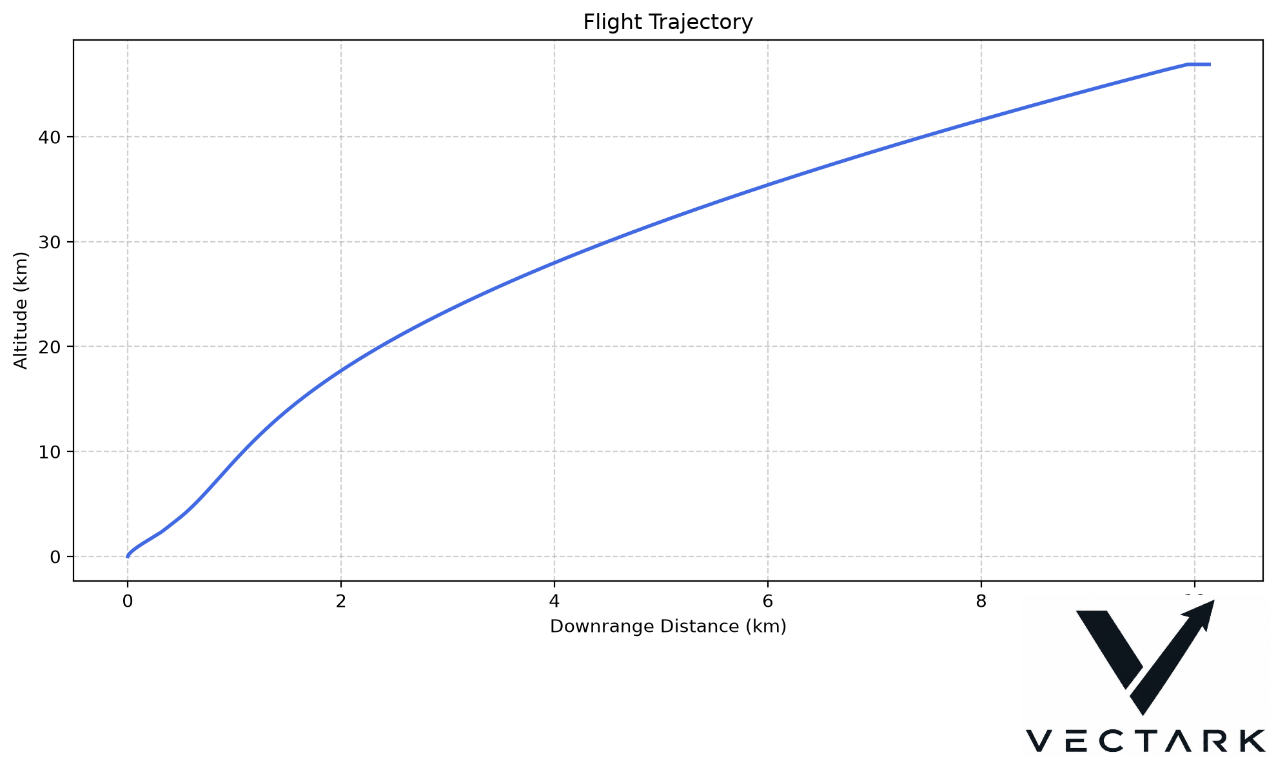
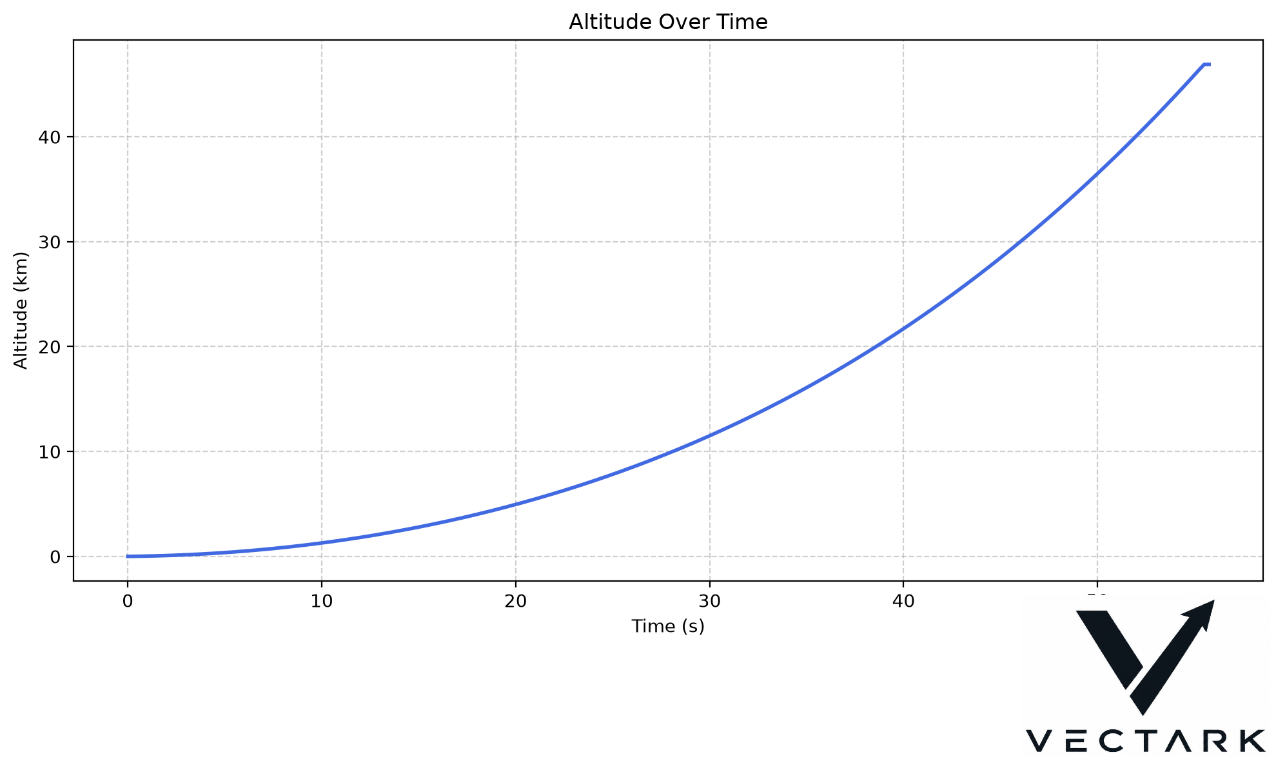
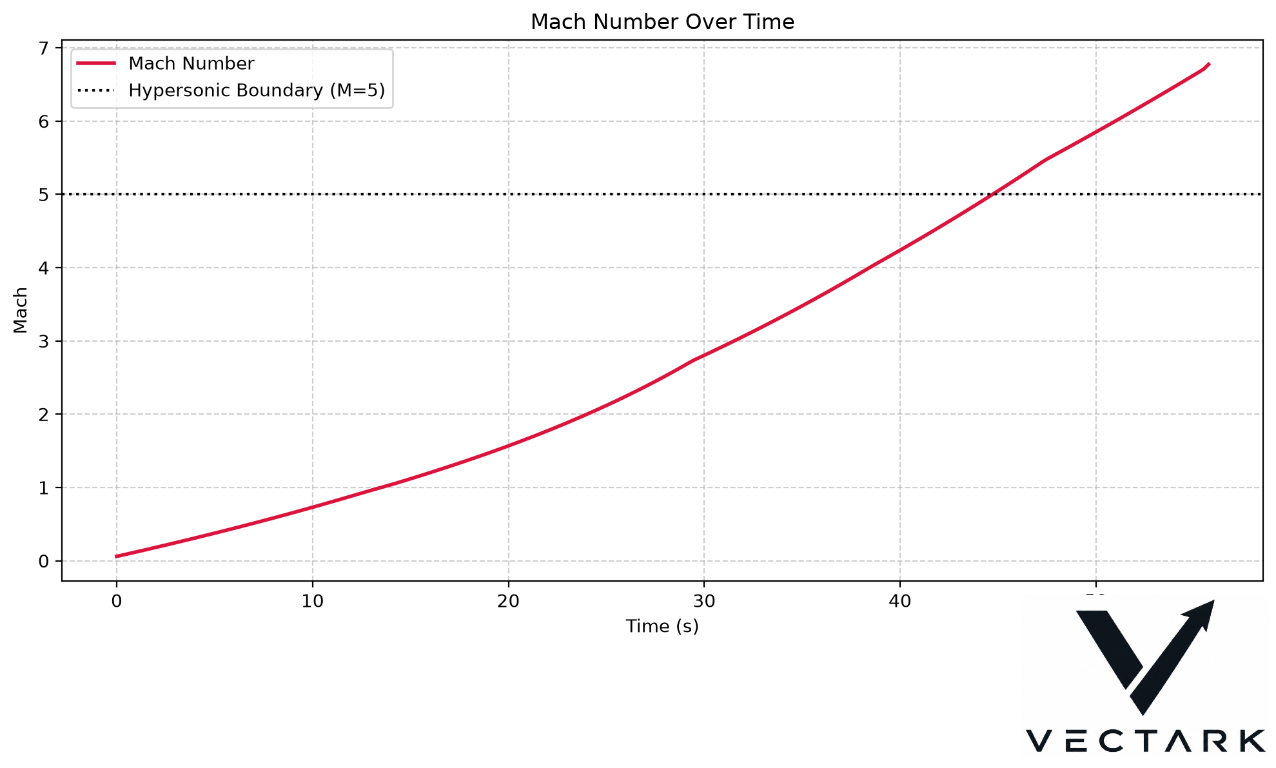
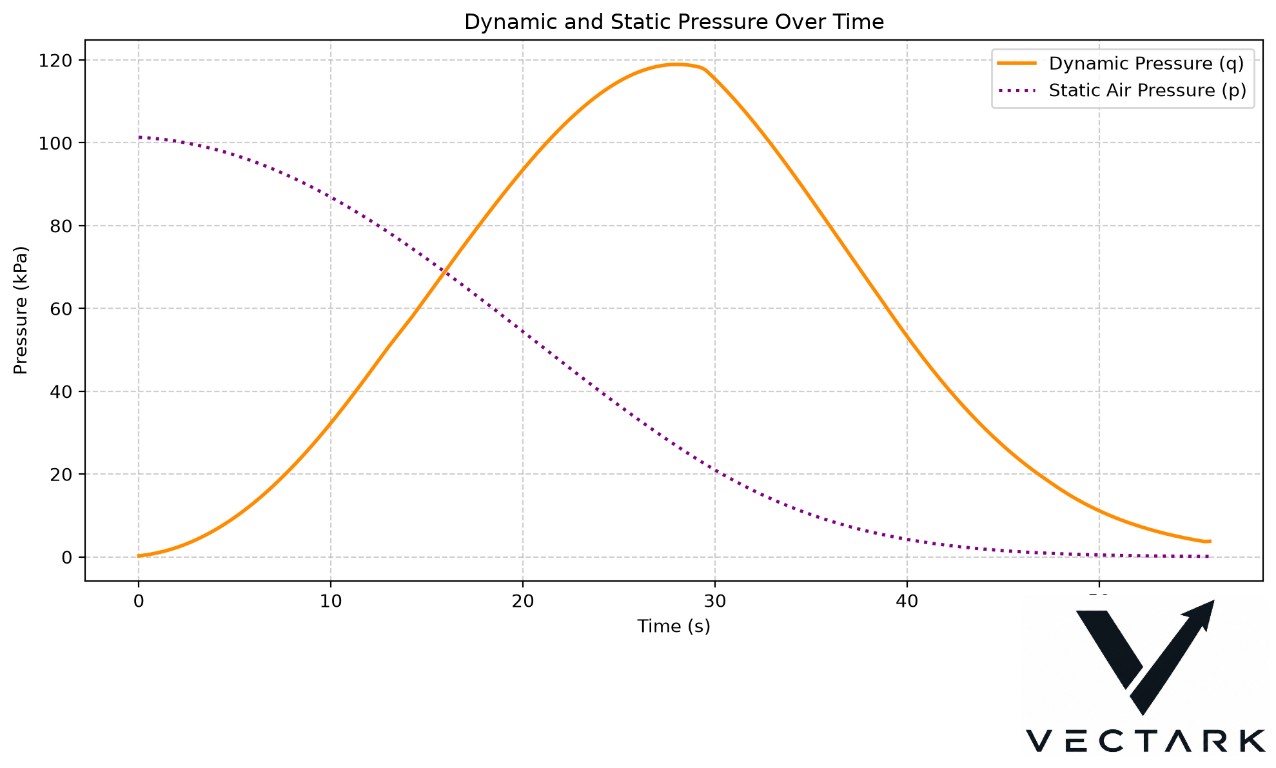
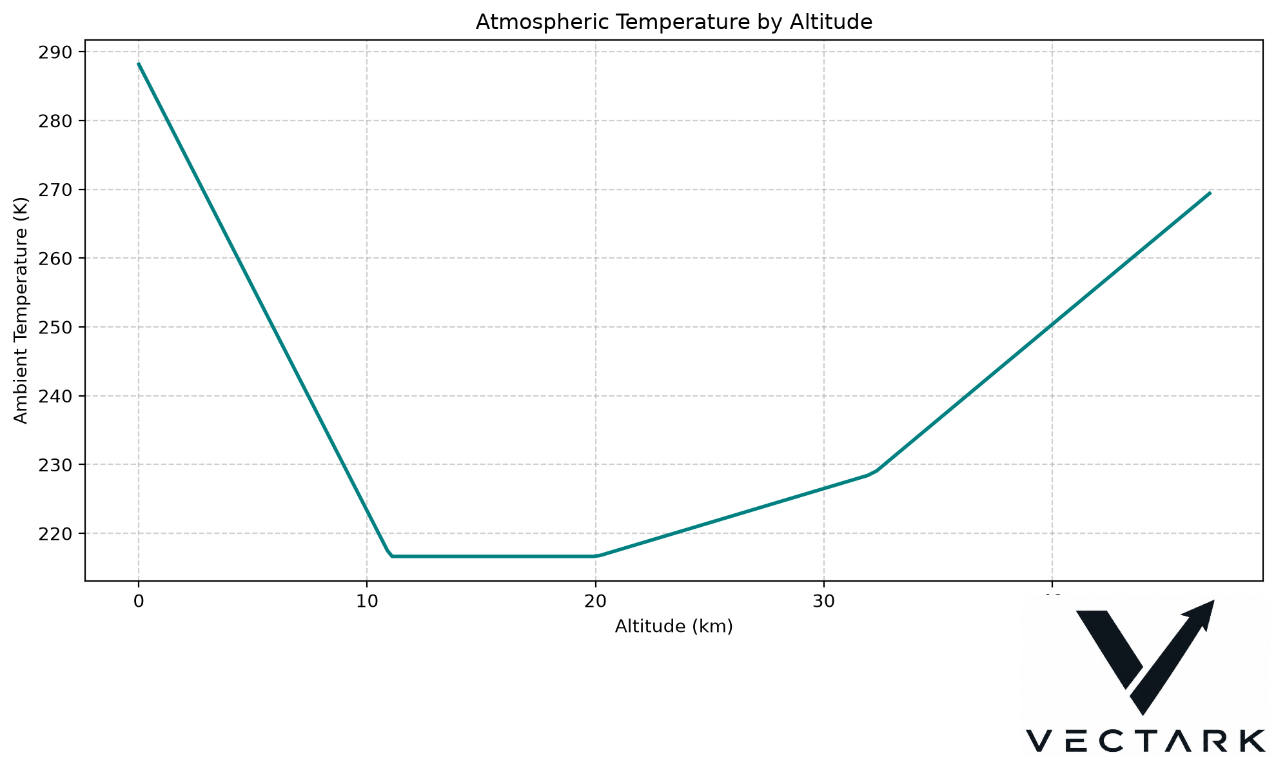
The figures below show preliminary simulation outputs for flight trajectory, altitude, Mach number, dynamic and static pressure, and atmospheric temperature. They are presented to examine model behaviour and identify trends; they are not validated vehicle performance claims.
On small screens, swipe horizontally over a plot to read its axis labels.
03 / IMPLEMENTATION
Tools & Methods
The modelling workflow is organised around transparent, reproducible numerical analysis and clearly documented assumptions.
- Visual Studio CodePython development, debugging and project workflow.
- Python 3.11+Modular implementation of the coupled model components.
- NumPyNumerical arrays and scientific computing.
- MatplotlibPlotting and inspection of model outputs across the flight envelope.
This is a preliminary modelling study, not a vehicle design or flight-performance claim. Model fidelity is limited by the stated assumptions, correlations and validity ranges.
← Back to Flight Dynamics & Control